The Startup Hero’s Wake-Up Call
Maria was a project management rockstar. At her 150-person tech startup, she could juggle a product launch, a website redesign, and a system migration simultaneously, all while keeping her stakeholders happy and her teams motivated. Her Gantt charts were works of art, her stand-ups were legendary for their efficiency. So, when a Fortune 500 company came knocking, she jumped at the chance to bring her skills to a bigger stage.
Six months in, Maria felt like she was drowning. Her tried-and-true methods were failing. A simple request for a resource from another department got lost in a sea of conflicting priorities and opaque approval processes. A project she thought was a top priority was suddenly de-funded because it didn’t align with a new “strategic pillar” she’d never heard of. Communication wasn’t a quick Slack message; it was a complex web of VPs, directors, and cross-functional committees, each with their own agenda.
Maria’s experience isn’t unique. It’s the classic story of what happens when project management scales. The skills that make you a hero in a small, agile environment are just the entry ticket to the complex, high-stakes world of enterprise-level project management. Here, you’re not just managing a project; you’re conducting a symphony.
From Soloist to Conductor: The Shift to Portfolio Management
The single biggest shift in enterprise project management is moving from the project to the portfolio. At a startup, you might be focused on playing your instrument—your project—perfectly. In an enterprise, you’re the conductor, responsible for ensuring all the different instruments (projects) are playing the right notes, at the right time, in harmony with the overall composition (the company’s strategy).
This is the core of Project Portfolio Management (PPM). It’s not about doing projects right; it’s about doing the right projects. Ask yourself these questions:
- Of the 50 projects currently in flight across our organization, which ones are actually moving us closer to our quarterly and annual business goals?
- What is the total investment in projects related to “market expansion” versus “operational efficiency,” and is that the right balance?
- If we have to cut 15% of our project budget tomorrow, where do we cut to minimize the impact on our long-term strategy?
Without a portfolio mindset, these questions are impossible to answer. You end up with a collection of well-run but disconnected projects, each a beautiful solo that contributes to a cacophony of noise rather than a powerful symphony. The goal is strategic alignment, ensuring every ounce of effort and every dollar spent is a deliberate step toward a defined business objective.
The Sheet Music of Success: Why Governance Is Your Friend
Let’s be honest: the word “governance” can conjure images of bureaucratic red tape and soul-crushing process meetings. In a dysfunctional organization, that’s exactly what it is. But in a high-performing enterprise, governance is the sheet music. It’s the shared framework that allows hundreds of musicians to play together beautifully without constant, direct instruction from the conductor.
Creating a Common Language
Effective governance establishes a common language and a predictable rhythm. This includes:
- Standardized Methodologies: This doesn’t mean forcing every team into a rigid, one-size-fits-all process. It means having a playbook. Maybe your infrastructure teams use a Waterfall-like approach for its predictability, while your software teams use a scaled Agile framework like SAFe. The key is that the frameworks are defined, understood, and their outputs can be integrated at the portfolio level.
- Clear Stage-Gates: A project shouldn’t be a runaway train. Enterprise governance implements clear checkpoints (e.g., ideation, business case approval, development, launch). At each gate, stakeholders have the information they need to make a conscious decision: Do we proceed? Do we pivot? Or do we stop and reinvest these resources elsewhere?
- Defined Roles and Responsibilities: Who is the ultimate decision-maker? Who needs to be consulted? Who just needs to be kept informed? A simple RACI (Responsible, Accountable, Consulted, Informed) chart at the enterprise level can prevent countless hours of confusion and political infighting.
Think of it this way: without governance, every project kickoff is a negotiation. With governance, everyone knows the rules of the road, freeing them up to focus on the creative and strategic work of the project itself.
Mastering the Acoustics: Communication in a Sprawling Organization
In a 50-person company, communication is organic. You overhear things in the kitchen; you grab the CEO for a quick chat. In a 50,000-person company, communication must be architected with the precision of a concert hall. If you get the acoustics wrong, your message is either lost entirely or becomes a distorted, confusing echo.
A project manager I once worked with, let’s call him David, was leading a critical software implementation. His team was hitting all their milestones. The problem? He was only communicating with his direct stakeholders in the IT department. When the software was ready to roll out, the sales department—the primary end-user—revolted. They felt blindsided. They hadn’t been consulted on key features, and their training was an afterthought. The project, though technically successful, was a business failure. It was eventually scrapped after months of painful, low adoption.
David’s mistake was failing to appreciate the scale of enterprise stakeholder management. It’s a discipline in itself. You need a formal communication plan that maps your stakeholders, analyzes their influence and interest, and defines the message, cadence, and channel for each group. An executive sponsor needs a one-page dashboard on business outcomes, not a 50-line risk register. The frontline users need to know “what’s in it for me” and receive hands-on training, not a high-level project charter.
The Art of the Ensemble: Resource Management at Scale
Perhaps the most challenging aspect of enterprise PM is resource management. You rarely “own” your team. Your senior developer might be allocated to you for 15 hours a week but also has commitments to three other “high-priority” projects. Your business analyst is a shared resource from a central pool. You’re constantly negotiating for the time and talent you need to succeed.
This is where enterprise-level thinking becomes critical. It’s not about fighting for “your” resources; it’s about ensuring the company’s most critical resources are deployed on the company’s most critical work. This requires mature capabilities like:
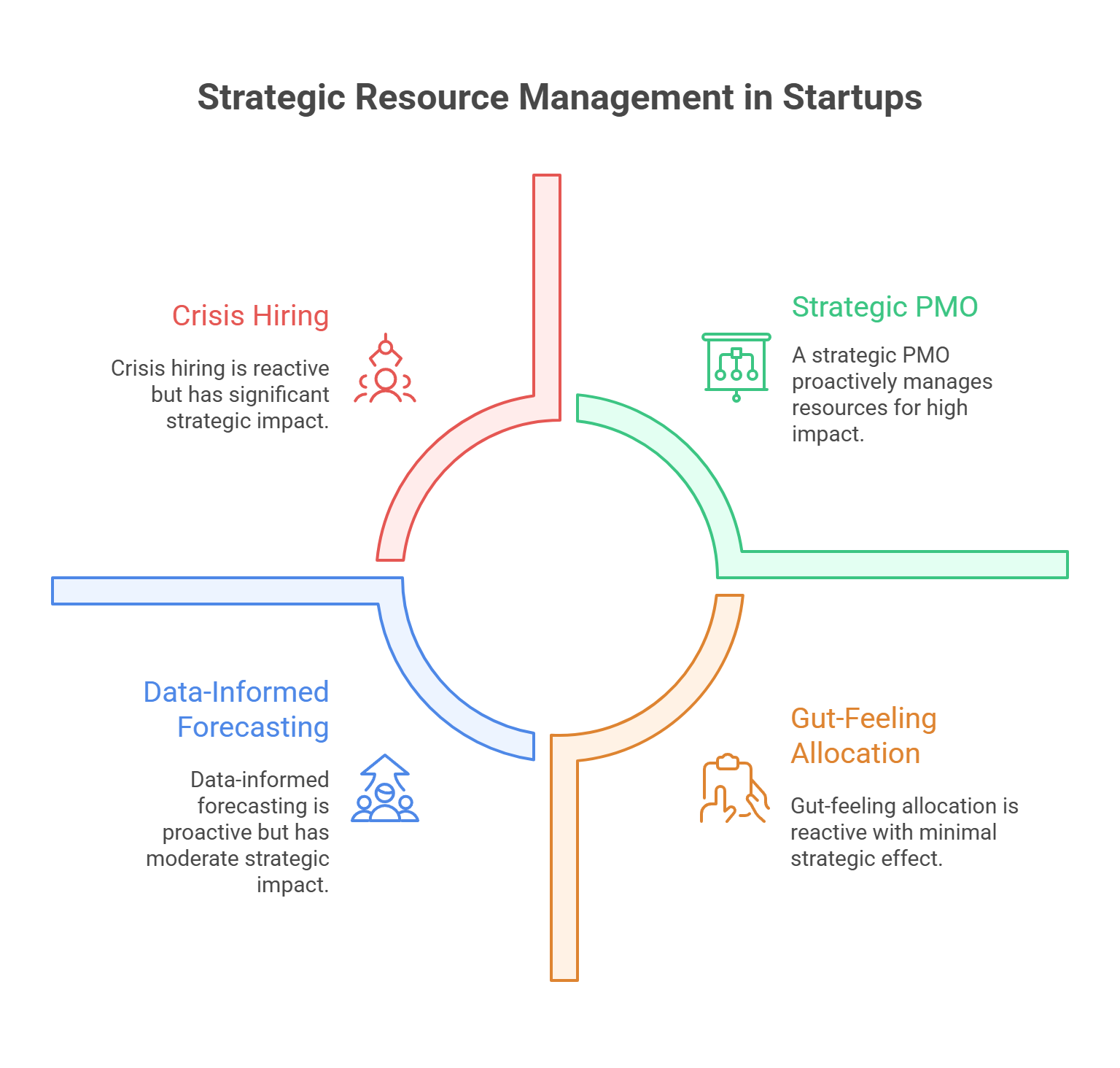
- Capacity Planning: Looking beyond your project to understand the total demand on key teams (like QA, data science, or UX) over the next two to four quarters. This allows leadership to identify bottlenecks and make strategic decisions about hiring, training, or outsourcing *before* it becomes a crisis.
- Resource Forecasting: Using data from past projects to more accurately predict the resource needs for future initiatives. This moves resource allocation from a gut-feeling guessing game to a data-informed science.
- A Strong PMO (Project Management Office): A strategic PMO acts as the air traffic controller for resources. They have the portfolio-wide view to see who is over-allocated, where there is spare capacity, and can help mediate conflicts based on strategic priorities, not on who shouts the loudest.
The Final Bow: Are You Ready to Lead the Orchestra?
Making the leap to enterprise-level project management is a profound shift in mindset. It’s about elevating your perspective from the tactical details of a single project to the strategic landscape of the entire organization. It’s about trading solo heroics for the collaborative leadership of conducting an orchestra.
You learn that success isn’t just about delivering on time and on budget. It’s about delivering value, ensuring alignment, facilitating clear communication across vast distances, and making the entire organization more effective. It’s about making sure that when all the individual projects play their part, the result is a powerful, resonant symphony that moves the entire business forward.
So, take a look at your own practices. Are you still trying to be the star soloist, focused only on your part? Or are you ready to pick up the baton, read the entire score, and lead the symphony?