
The Sound of Silence in the Conference Room
Have you ever been there? You’re in the middle of a high-stakes presentation. You’ve spent weeks gathering data, perfecting your slides, and rehearsing your talking points. Your proposal is solid, the logic is undeniable, and the ROI is compelling. You reach your final slide, look up expectantly, and are met with… polite nods. A few lukewarm questions. And then, the dreaded phrase from the most senior person in the room: “Interesting. We’ll take it under advisement.”
In that moment, your game-changing initiative dies a quiet death, not with a bang, but with the whimper of corporate indifference. What went wrong? The data was perfect. The deck was beautiful. The problem wasn’t your idea; it was your approach. You treated communication as a broadcast, not a dialogue. You managed a presentation, not the people.
The difference between a good manager and a truly influential leader lies in mastering a complex, dual mandate: skillfully navigating the intricate web of stakeholder needs on the ground while simultaneously crafting a compelling, strategic narrative for the board. These aren’t two separate jobs; they are two sides of the same coin of effective leadership. It’s about moving beyond the deck and mastering the art of the conversation.
The Stakeholder Spectrum: More Than Just a Power Grid
Most of us were taught to manage stakeholders with a simple 2×2 matrix: the power/interest grid. We plot names in boxes, label them “Keep Satisfied” or “Manage Closely,” and feel a sense of analytical accomplishment. While it’s a decent starting point, this sterile approach misses the most critical element: the human one. Your stakeholders aren’t just coordinates on a chart; they are individuals with their own motivations, fears, ambitions, and political capital.
To truly manage stakeholders, you must stop plotting and start understanding. Think of it less like chess and more like gardening. You don’t just move pieces into position; you cultivate the soil, provide the right nutrients, and create an environment where things can grow. This means moving beyond roles and into personas.
Meet the Cast of Characters
In any major initiative, you’ll likely encounter a recurring cast of stakeholder archetypes:
- The Ally: This person is already on your side. Your job isn’t to convince them, but to equip them. Give them the talking points, data, and soundbites they need to champion your cause in rooms you’re not in. Their support should be amplified, not assumed.
- The Skeptic: They aren’t necessarily an adversary; they’re driven by a healthy dose of professional caution. They’ve seen projects fail before. Don’t try to overwhelm them with optimism. Instead, engage their critical thinking. Acknowledge risks upfront and show them your mitigation plan. Turning a thoughtful skeptic into a supporter is a massive win, as their endorsement carries immense weight.
- The Overloaded Executive: This stakeholder is influential but buried in a hundred other priorities. Your 30-page report is their nightmare. Communication with them must be ruthlessly efficient. Think executive summaries, clear “asks,” and framing your project in the context of their top three priorities. How do you make their life easier?
- The Territorial Expert: This person holds deep institutional knowledge and ownership over a specific domain. Your project might feel like a threat to their expertise or control. The key here is respect. Engage them early, make them a partner in the solution, and publicly credit their contributions. Make them a co-author of success, not a victim of change.
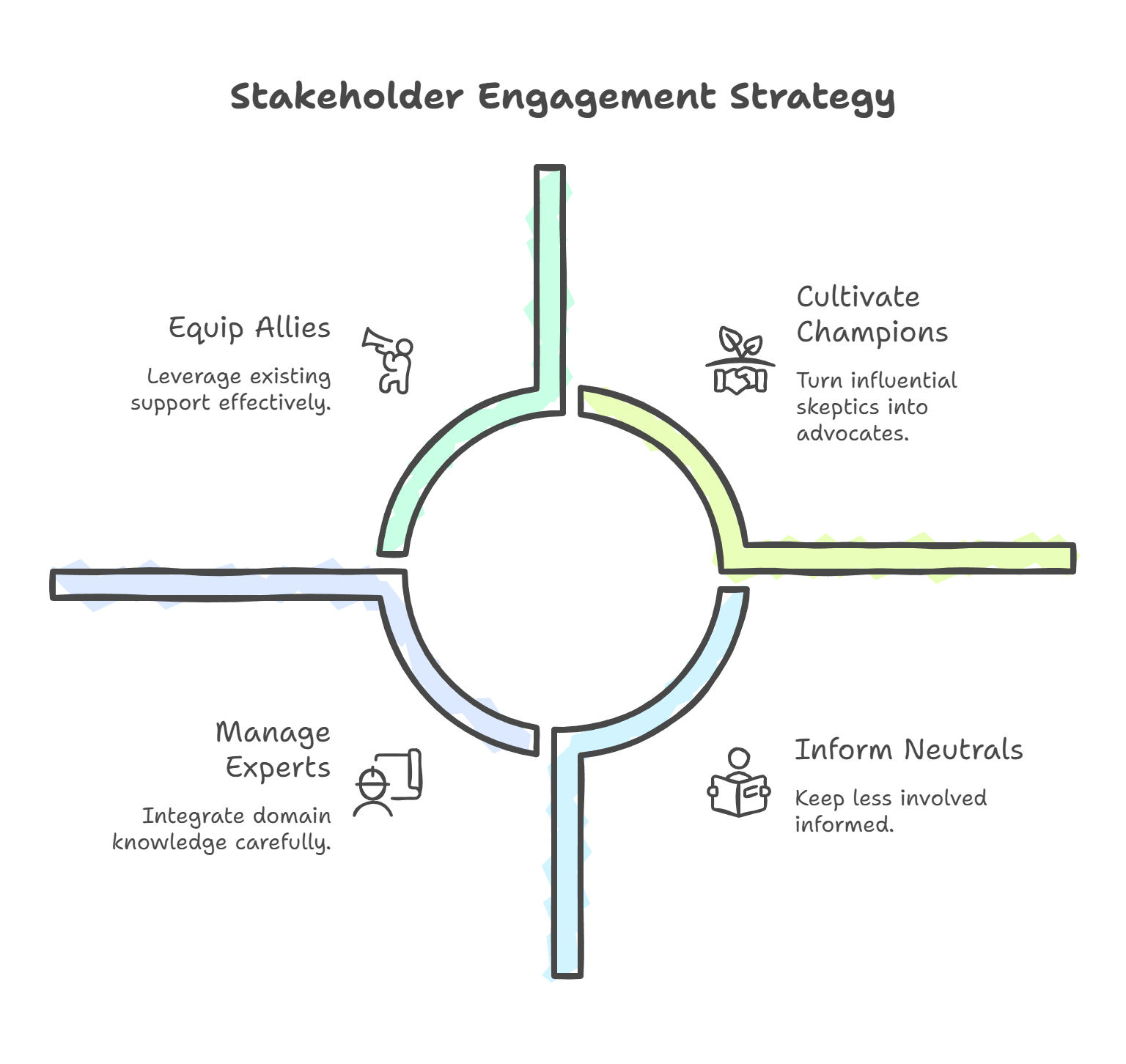
The first step in effective stakeholder management is a “listening tour” long before you have a formal proposal. Have coffee. Ask open-ended questions: “What does a win look like for your team this year?” or “What are the biggest headwinds you’re facing?” This isn’t about pre-selling your idea; it’s about building the social capital and deep understanding you’ll need to frame your idea in a way that resonates with their world.
The Boardroom: A Different Altitude, A Different Language
If stakeholder management is about navigating the varied terrain on the ground, board communication is about flying at 30,000 feet. The board of directors doesn’t operate on the same level as your project team or even your executive peers. They are fiduciaries, responsible for the long-term health and strategic direction of the entire enterprise. Presenting to them with the same detail you’d give a department head is a recipe for disaster.
They aren’t there to debate the merits of a specific software vendor or the nuances of a project timeline. They are there to answer a few fundamental questions:
- Does this align with our overall strategy?
- How does this create or protect long-term value?
- What are the significant risks, and how are they being governed?
- How does this position us against our competition?
Your job is to translate your operational reality into their strategic language. Consider the CTO proposing a major cloud migration.
The Ineffective Pitch (1,000-foot view): “We need to migrate our on-premise servers to a multi-cloud environment to reduce technical debt, improve scalability, and leverage containerization for our development teams.”
The board hears jargon and cost. Their eyes glaze over. They ask a few polite questions about the budget and move on.
The Strategic Narrative (30,000-foot view): “To achieve our three-year strategic goal of expanding into the European market, we must be more agile than our competitors. Our current infrastructure limits our ability to launch and scale new products, putting our growth targets at risk. By moving to a modern cloud platform, we can cut our product-to-market time by an estimated 40%, reduce our capital expenditure on hardware by $3 million annually, and meet the stringent GDPR compliance standards required for European operations. This isn’t an IT project; it’s a direct enabler of our corporate growth strategy.”
See the difference? The second pitch connects the “what” (cloud migration) directly to the “so what” (market expansion, competitive advantage, risk mitigation). It speaks their language.
Practical Techniques for Bridging the Divide
Knowing the theory is one thing; putting it into practice is another. Here are four battle-tested techniques to connect your stakeholder groundwork to your boardroom performance.
1. The Pre-Briefing Masterclass
The cardinal rule of board communication is: no surprises. The board meeting should be the formal conclusion of a conversation, not the beginning of one. Before you ever step into the boardroom to present a major proposal, you should have conducted one-on-one pre-briefings with key board members and influential stakeholders.
These aren’t mini-presentations. They are strategic conversations. The goal is to:
- Gauge Temperature: Understand their initial reactions and concerns in a private setting.
- Uncover Landmines: Discover potential objections or political sensitivities you might have missed.
- Build Your Coalition: Use their feedback to refine your proposal, making them feel heard and invested in the outcome. By the time you get to the formal meeting, your most important allies already know the story and are prepared to support you.
2. The Dashboard That Tells a Story
Most board dashboards are a sea of numbers—KPIs, metrics, and financial data presented without context. An effective board dashboard is not a data dump; it’s a narrative instrument. It should visually tell the story of your progress against the strategic goals they care about.
Use the simple Red-Amber-Green (RAG) status, but with a critical addition: a brief, forward-looking commentary. Don’t just state that a metric is red. Explain why it’s red, what the plan is to fix it, and, most importantly, what you need from them. Frame a “red” status not as a failure, but as an invitation for a strategic discussion. It shows you are in control and builds trust far more than a sea of unblemished green ever could.
3. Mastering the Art of the „Ask“
Every communication with the board should have a purpose. Are you there for a decision, for advice, for awareness, or for formal approval? Be explicit. End your presentation with a clear, concise slide titled “Our Ask.”
Frame the ask in a way that empowers them. Instead of “We need you to approve this budget,” try “To unlock the growth potential we’ve discussed, we are seeking the board’s approval for a strategic investment of [amount].” Clarity eliminates ambiguity and focuses the discussion on the decision that needs to be made, respecting their time and their role.
4. The Rhythm of Communication
Trust isn’t built in quarterly meetings. It’s built in the quiet moments in between. Establish a consistent, lightweight communication cadence outside of formal board cycles. This could be a concise, one-page monthly email update summarizing progress, highlighting a key win, and flagging a potential risk.
This simple act does two powerful things. First, it keeps your initiative top-of-mind and demonstrates consistent execution. Second, it reduces the pressure on the formal board meetings, allowing them to remain focused on truly strategic issues, because they are already confident in the operational oversight.
From Presenter to Partner
Ultimately, excelling at stakeholder and board communication is about a fundamental identity shift. It’s about evolving from someone who prepares reports and gives presentations to someone who builds consensus, shapes narratives, and guides strategic decisions. It’s the difference between managing work and leading people.
You can have the most brilliant strategy in the world, but if you can’t bring people along with you—from the skeptical engineer in the trenches to the discerning director in the boardroom—it will remain just an idea on a slide. The next time you prepare for a major initiative, ask yourself: Am I building a deck, or am I starting a dialogue?